
Ask most commercial appraisers what drew them to the profession, and you won’t hear “spreadsheets.” You’ll hear about the analytical challenge of valuing complex assets, the satisfaction of a well-supported opinion of value, and the trust clients place in a firm’s judgment.
Yet for a lot of firms, a surprising share of the workday goes to something else entirely: re-entering data, tracking down file versions, and reformatting reports. It’s worth being honest about what that actually costs.
Here’s what a typical appraisal workflow looks like across eight phases, and what changes when a firm operates on a connected platform instead.
Phase 1: Job Setup
- Before: Bids in a spreadsheet, assignments communicated by email, job status spread across three systems and one person’s memory.
- After: One dashboard holding every client record, deadline, and staff assignment.
Phase 2: Property Research
- Before: Five separate logins, with data copy-pasted into Word, then re-entered into Excel, then entered again into the report.
- After: 100+ integrated data sources feeding a centralized, searchable database, entered once and used everywhere.
Phase 3: Property Inspection
- Before: Handwritten notes and photos emailed back to the office for manual transcription.
- After: A mobile app capturing photos and field notes on-site, tied directly to the job record in real time.
Phase 4: Comparable Sales
- Before: Personal comp folders no one else can find, with the same verification calls repeated by different appraisers.
- After: A firm-wide, searchable comp database that grows with every assignment.
Phase 5: Valuation modeling
- Before: Fragile custom Excel models that vary by appraiser and take new hires months to learn.
- After: standardized models for 16+ property types, with research data flowing in automatically.
Phase 6: Report Writing
- Before: Hours spent formatting Word documents, with maps and data re-keyed by hand.
- After: One click sends maps, charts, comps, and photos into a firm-branded, USPAP-compliant template.
Phase 7: Collaboration and Review
- Before: Email chains, multiple file versions, and no one sure which draft is current.
- After: One live job record with structured review routing and a clear audit trail.
Phase 8: Delivery and Archiving
- Before: Invoicing in a separate system and files archived in a shared drive no one can search six months later.
- After: Invoicing built into the same platform, with every completed assignment adding to a searchable, firm-wide data asset.
The inefficiency in a fragmented workflow doesn’t stay contained to one phase, it compounds. Data entered in research gets re-entered in the model, then again in the report. Comps verified on one assignment disappear into a personal folder instead of benefiting the next appraiser. Reports vary by appraiser instead of reflecting a consistent firm standard.
We know change isn’t easy, and workflows built over years feel dependable even when they’re inefficient. But firms that have made the shift consistently report faster turnaround, better report quality, and appraisers who finally feel like they’re spending their time on the right work.
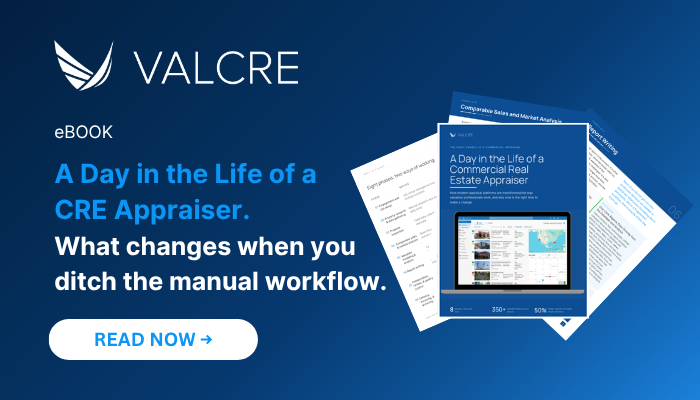
Our Co-Founder, Grant Norling, put together a full breakdown of what this transformation looks like at every stage, before and after, in our new eBook, A Day in the Life of a Commercial Real Estate Appraiser: Before and After Valcre.
Download it here to see the complete picture, including how firms like Cogito Realty Partners produce appraisal reports 50% faster using Valcre.
Curious what this could look like for your firm specifically? We’d be glad to show you. Schedule some time with our team here.